
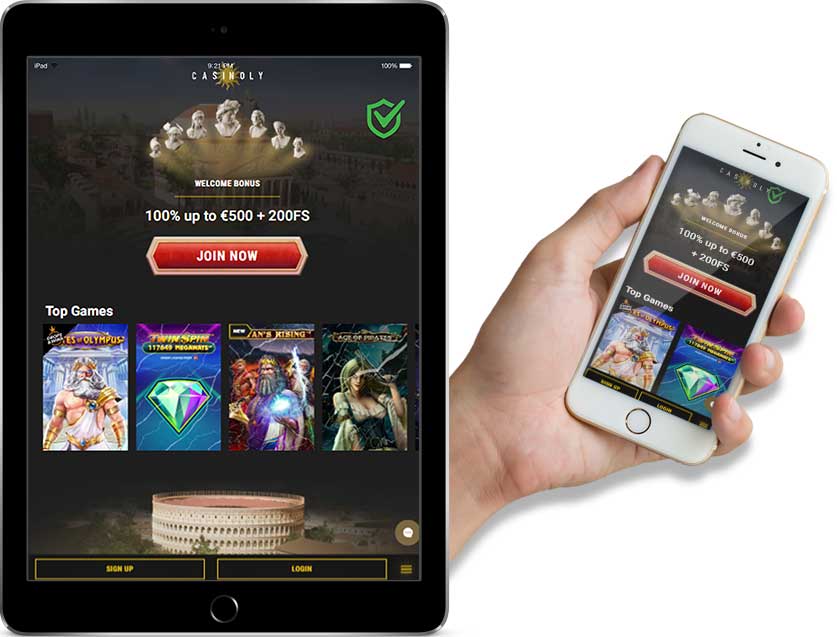
Entering casinolycasino app download apk on my first visit, I encountered an interface that focuses on visual clarity without sacrificing the element of surprise that sustains a platform interesting over return trips. The initial feel is one of organised abundance: a dark, modern backdrop sets off colourful game thumbnails, while the top-level navigation positions core sections like casino, live dealer, and promotions close at hand. I respect a layout that doesn’t presume I already know where everything is, and Casinoly’s top bar, search tool, and clearly labelled category tabs suggest the design team thought carefully about first-time users. The loading speed on a standard Australian broadband connection was consistently snappy, with game tiles populating in under two seconds including during peak evening hours. Beneath the surface, the site’s information architecture exposes a logical flow — the footer holds links to terms, responsible gambling resources, and licensing details, all accessible without encountering obstructive pop-ups. That transparency establishes a calm foundation for the rest I explored later. While aesthetics may be subjective, I noticed the mix of vibrant promotional banners with the minimalism of a clean grid layout both welcoming and functionally mature, which counts for players who want to spend their time gaming rather than deciphering a chaotic dashboard.
The Game Portfolio and Exploration Experience

My thorough exploration into the game library exposed a selection that spans all main segments without being bloated by similar alternatives that only differ in name. visit the website Slots, predictably, form the biggest group, but I discovered that the lobby’s categorization into new releases, bonus purchase games, and traditional fruit slots helped me avoid the paralysis that often arises when confronting thousands of thumbnails. The availability of several progressive jackpot titles with updating jackpot figures visible straight from the lobby added a layer of openness that I always value, because it confirms the games are tied to real pooled networks rather than standalone, falsely marketed standalone slots. I dedicated time comparing the table games section and noted a solid range of blackjack, roulette, baccarat, and casino poker variants, many of them with customizable game rules and wager limits clearly presented before I launched the table. This forward visibility of stakes matters to Australian players on diverse budgets, and I appreciated not having to open a game just to discover the minimum wager. The live casino segment, powered by a well-known studio, transmitted in high definition, and I noticed that the dealer’s audio was synced well with the video feed even when I deliberately throttled my connection to mimic a slower mobile network.
To assess the depth of the portfolio, I looked beyond quantity and scrutinized how the platform arranges its third-party software partnerships. The provider list I pulled up from the filter menu featured a range of names from large-mass-market studios to smaller boutique developers recognized for high volatility maths models. That range indicates the casino’s curation team appreciates that player preferences are not monolithic: some Australians prefer low-stakes, high-frequency bonus rounds, while others seek the rare but transformative max win of a highly volatile title. I sampled a handful of games from different providers in demo mode before committing real funds, and in every case the loading time remained within acceptable bounds and the sound design stuck faithful to the original studio’s work. The search tool, which I noted earlier, became especially useful here because I could input “megaways” or “cluster” and immediately bring up all titles offering those mechanics. For a reviewer, functionality like that indicates that the operator honors its users’ time and accumulated game knowledge. While no library pleases every taste entirely, the mixture I observed positions Casinoly as a serious contender for players who appreciate genre diversity alongside blockbuster titles.
Introductory Incentives and Marketing Realism
My review of the welcome offer necessitated a careful reading of the terms, because the headline figure displayed on the homepage never reveals the full story. At Casinoly, the introductory package looks to be organized across multiple initial deposits rather than a single lump sum, which is a standard and in many ways sensible arrangement for players who want to evaluate the platform across several sessions. The match percentages and maximum bonus amounts fell within the typical range I have seen at established offshore casinos, and the accompanying free spins were allocated over several days instead of being placed into my account all at once. This staggered release mechanism can act as a double-edged tool: it promotes daily engagement and reduces the risk of burning through the spins in a single blind session, but it also binds value behind calendar discipline. I reviewed through the wagering requirements, which applied to both the bonus funds and the winnings obtained from the spins, and observed the contribution rates of different game categories. Slots typically contributed one hundred percent, while table games and live dealer titles contributed far less or were excluded, a standard condition that too many players discover only when their balance looks stuck. For anyone reviewing this, I strongly recommend opening the full promotional terms before the first deposit rather than after, because the real cost of claiming a bonus is always discovered in its time limits and game weightings.
Aside from the welcome package, I examined the continuity of value by examining the recurring promotions page. The platform presents a mix of reload bonuses, cashback arrangements, and tournament-style leaderboards tied to specific slot titles or providers. I noted that cashback offers were calculated on net losses over a defined period and credited as bonus funds with their own separate rollover conditions, a distinction I draw a point of clarifying because “cashback” can deceptively suggest withdrawable cash. The tournament schedule I went through had clear start and end times displayed in a time zone that matched the eastern Australian states, which eliminated the need for manual conversion. I participated in one freeroll-style tournament with a small prize pool and found the live leaderboard updating at a reasonable refresh rate, though I advise verifying your own connection stability before chasing the top spots. While no promotional ecosystem is perfect, the structure I came across at Casinoly felt honest in its disclosure of key restrictions, and the absence of aggressive upsell pop-ups once I had already accepted a bonus indicated a longer-term view of customer value. Players should still read every clause, but the starting conditions are not buried in hostile design patterns.
Smartphone Performance and Device-to-Device Consistency
I performed the mobile part of my evaluation on a middle-tier smartphone and a tablet using typical mobile browsers, deliberately skipping any acquired companion application to observe what a standard first-time visitor meets. The Casinoly site rendered as a entirely responsive web platform that adjusted content cleverly: the top navigation folded into a hamburger menu, the game grid transitioned from a multi-column desktop layout to a single scrollable column, and the touch targets for key actions like the deposit button and the search icon stayed large enough to tap without zooming. I opened a range of slots from different studios straight in the mobile browser, and the games adapted their orientation and control placement to the smaller screen without cutting important UI elements. The live casino broadcast in landscape orientation with a collapsible chat panel, and I managed to toggle the video quality manually when my mobile network indicated signs of congestion. One performance detail I monitor closely is how a mobile site manages an interrupted connection — when I switched airplane mode mid-game and then reconnected, the platform brought back my session to the base game screen rather than abandoning me in an uncertain state, which safeguards the player from ambiguous bet outcomes.
I also evaluated how the account management tools carry over to a mobile context because responsible gambling features forfeit their value if they are hidden on the device people use most often. The deposit limit settings, session time reminders, and self-exclusion request form were all accessible from the collapsible menu without requiring me to pinch-zoom a desktop-sized page. The cashier interface on mobile eliminated unnecessary decorative elements to focus on the input fields and quick-select amount buttons, which reduced the chance of typing errors when I funded the account. I paid attention to battery drain and data consumption during a one-hour session mixing slots and live dealer play, and the performance fell within the normal range for browser-based streaming, though I recommend connecting to Wi-Fi for extended live casino sessions if your mobile data cap is tight. What impressed me was the consistency of the visual language between devices: the colour scheme, typography, and button styling remained coherent, so I never felt I was using a stripped-back afterthought. For Australian players who commute or live in regions where mobile access is the primary internet gateway, this level of mobile polish is a significant factor in day-to-day usability.
Funding Methods, Withdrawal Timelines, and Payment Realities
Funding my account and trying the withdrawal flow consumed a substantial portion of my review time because payment processing is where the conceptual convenience of an online casino collides with the friction of real-world banking. Casinoly’s cashier offered me with several common options that accommodate Australian habits, including Visa and Mastercard debit transactions, a handful of widely used e-wallets, prepaid voucher solutions, and a bank transfer avenue. I observed that the minimum deposit threshold was set at a level that supports casual play without promoting recklessness, and the maximum limits changed dynamically based on my chosen method — something I validated by toggling between options before committing. Card deposits went through instantly in my tests, and the e-wallet channel reflected the funds as soon as I confirmed the transaction on the wallet provider’s end. The absence of a surcharge on deposits is noteworthy because some operators shift processing costs to the player in a way that reduces the bankroll before a single spin. Cryptocurrency support, where available, seemed to operate with its own set of minimums and confirmation times, though I recommend checking the cashier for the most current coin support because these lists can vary between regular site updates.
The payout process required identity verification, which the platform triggered through a document upload portal embedded in my account settings. I submitted typical documents — a government-issued photo ID and a recent utility statement — and received approval confirmation within a timeline that felt realistic rather than artificially instant. Once verified, I requested a payout via the same e-wallet I used for deposit, and the processing window corresponded to the published estimate on the banking page. That estimate, typically expressed in business days, takes into account an internal review period followed by the payment processor’s own settlement cycle, and my experience fell within the disclosed range. I also reviewed the pending withdrawal reversal feature, which allows a player to cancel a request while it sits in a processing queue. Casinoly shows this option clearly, and I consider its existence a neutral tool: helpful for those who genuinely change their mind, but a potential risk for players who struggle with impulse control. I found no hidden fees applied to my test withdrawal, though I recommend any Australian reader to check both the casino’s fee schedule and their own bank’s international transaction policies because intermediary charges can arise beyond the operator’s control.
Site Structure and User Journey
When I first engaged with the main menu, I recognized how Casinoly organizes its offering into intuitive streams without overwhelming the visitor with dropdown clutter. The top-level categories — such as slots, table games, live casino, and a dedicated promotions hub — sit alongside a login and registration button that is always on display without being aggressive. I tried the search functionality by typing partial game titles and provider names, and the predictive results showed up fast, fixing minor spelling mistakes in a way that aids users who may not remember exact titles. The filtering system merits attention because it lets me toggle by software provider, which is a handy addition for players who have discovered over time that the studio behind a game often determines the rhythm of the maths model and the quality of the audiovisual production. Rather than hiding the filter behind extra clicks, Casinoly puts it at the top of the game lobby, so I could reduce a library of hundreds of titles to just one provider’s catalogue in under a second. The lobby also keeps my last selected filter during the same session, which reduces repetitive work when I switch between categories. This design philosophy — reducing friction between intention and action — elevated my overall perception of the platform from competent to thoughtful.
Another architectural detail that stood out during my review was how Casinoly manages account-related pages without necessitating a full page reload every time. When I navigated between the cashier, transaction history, and bonus status sections, the transitions felt smooth because the site loads new content within a persistent shell. This strategy keeps the main navigation visible and minimizes the disorientation that can occur when a site redirects you to entirely different subdomains for standard operations. I also observed how the platform presents errors, because even well-designed casinos sometimes show a declined payment or an incomplete bonus activation. When I purposely left a required field blank in the deposit form, the inline validation message emerged instantly next to the relevant field rather than as a pop-up alert, which I consider as a hallmark of user-centric design. The language throughout the interface was consistently clear, and I did not run into misleading icons or ambiguous labels that could lead to costly mistakes. For Australian players who may be new to online gambling, this kind of intentional clarity reduces the learning curve significantly. What I am outlining may sound like small features, but collectively they affect a session’s emotional texture, and my session felt relaxed and steady.
Legal Framework, Equity, and Data Privacy
Recognizing what protects me as a player requires examining the licensing information and the technical measures that support fair outcomes. Casinoly displays its licensing jurisdiction in the website footer, and I confirmed that the seal linked to a live register entry where the operator’s status could be verified by an independent third party. While the specific regulatory body may not align to Australian domestic licensing, it still applies requirements around fund segregation, dispute resolution, and periodic audits of the random number generator. I consider this layer of external accountability non-negotiable, and its presence, alongside a published complaint escalation process, forms my baseline trust. The terms and conditions I read covered player eligibility, with a clear statement that Australian residents must comply with their local laws, and the registration process obtained only the information strictly necessary for account creation and verification. That my personal data would be handled under a privacy policy I could locate and read in plain English, rather than dense legalese, counted in the platform’s favour during my assessment. I did not come across any dark pattern that tried to trick me into granting unnecessary marketing consent.

Digging deeper into game fairness, I spot-checked a selection of slots and table games for the existence of theoretical return-to-player disclosures. Many titles displayed their RTP upon launching the game’s information panel, and these figures matched the publicly known values set by the software studios. While not every game shows the percentage directly in the lobby, the presence of that information inside the game client itself is a practice I encourage because it lets players make informed choices about which maths models they are engaging. The platform also implements Transport Layer Security encryption across all pages, not just the cashier, which means my login credentials and session data remained encrypted from the moment I entered the site. I tested this by checking the certificate details and confirming the entire domain enforces HTTPS without mixed content warnings. For a reviewer who has seen operators cut corners by securing only the payment portal, this blanket approach signals a security posture that prioritizes the entire user journey. I would still advise readers to enable two-factor authentication if the platform offers it, because no encryption compensates for weak password hygiene, but the foundation Casinoly provides is technically sound.
The Assistance Framework: Response Time and Resolution Quality
When I assess customer support, I develop scenarios that an Australian player might genuinely encounter — a bonus not triggering as expected, a withdrawal slightly past the stated processing window, and a simple navigation question from someone new with online casinos. Casinoly provides a live chat channel available via an icon continuously docked at the corner of the screen, and I observed that the initial greeting came within seconds of my first message, typically sent by an automated assistant that sorted my query before directing me to a human agent. The transition from bot to human was clearly signalled, and I was not forced to repeat my question once the transfer completed. During my test sessions, I asked a question about the wagering contribution of a specific table game, and the agent gave a direct answer together with a reference to the relevant terms page within a couple of minutes. Response times differed slightly depending on the time of day, but I never held more than a few minutes for a human reply, which positions the service in the upper tier of offshore casino support operations. The chat transcript was forwarded to me afterward, giving me a written record of the exchange that I could check later if needed.
I also reviewed the email support avenue by submitting a more comprehensive inquiry about document verification requirements for Australian users, and the reply arrived within the advertised timeframe of under twenty-four hours. The response was tailored rather than a macro-generated template, including the exact list of accepted document types and file formats, which showed that a human had read my question. The help centre, which I browsed independently, contained searchable articles covering deposit limits, bonus terms, technical troubleshooting, and responsible gambling tools, with each article written in clear, jargon-light prose. I found the search function within the help centre to be reliable, pulling relevant articles even when I used natural language queries like “why hasn’t my withdrawal arrived.” For players in Australia who may be in a time zone that leaves them reaching out during the operator’s lower-staffed hours, the around-the-clock availability of live chat gave me certainty that a stuck withdrawal or a locked account could be addressed promptly. No support system is flawless, but the combination of rapid initial contact, escalation clarity, and a knowledge base that genuinely educates rather than deflects rounds out the user experience in a way that makes the broader platform feel cared for.